Repair that starts with finding the fault, not selling the part
A garage door is 150 to 300 pounds of steel held in balance by springs under serious tension, nudged along by a motor that is only meant to do the last tenth of the work. When it misbehaves, the noise it makes narrows the cause down to about five things. We confirm which on site, and you hear the price before anything is touched.
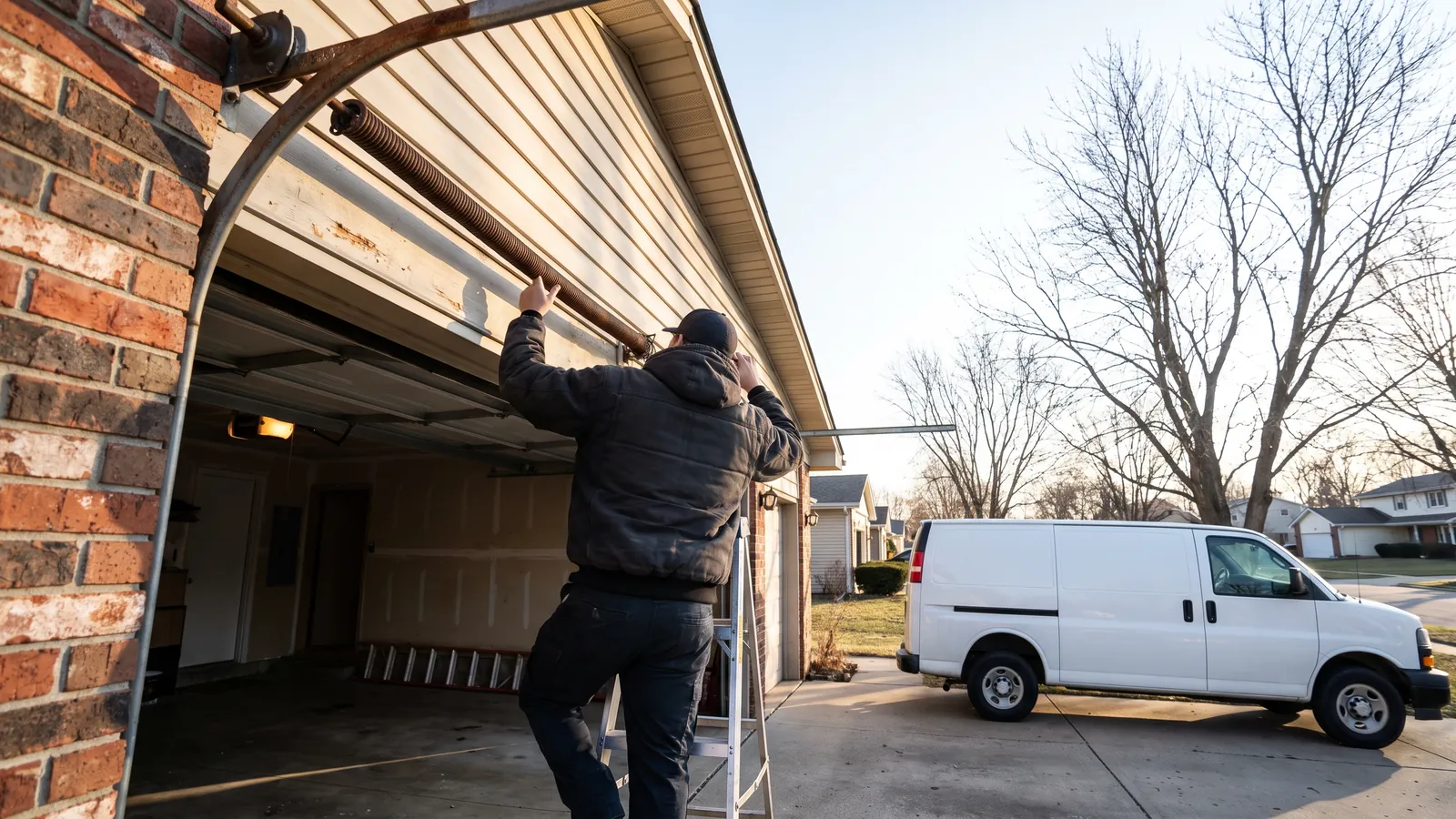
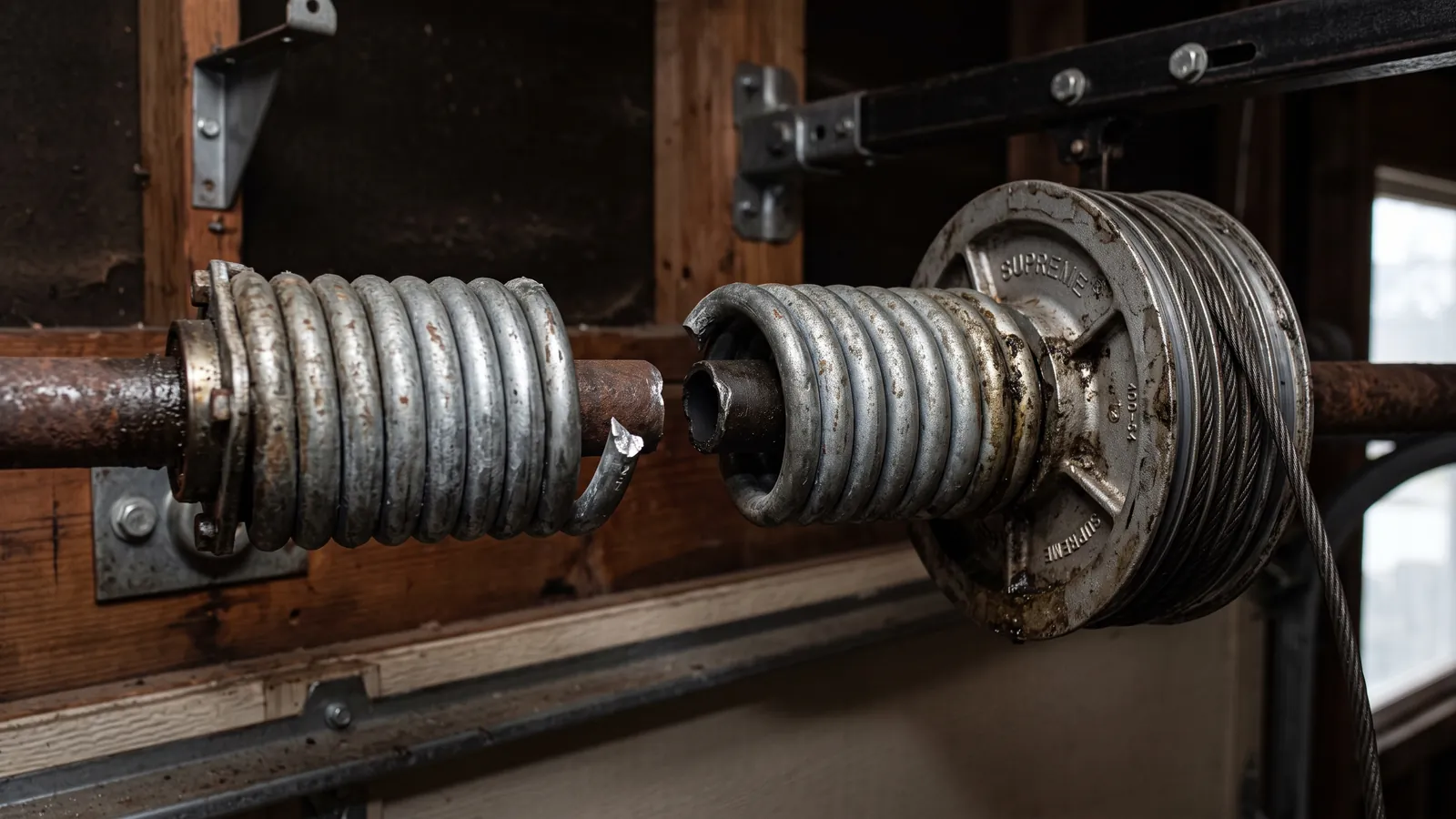
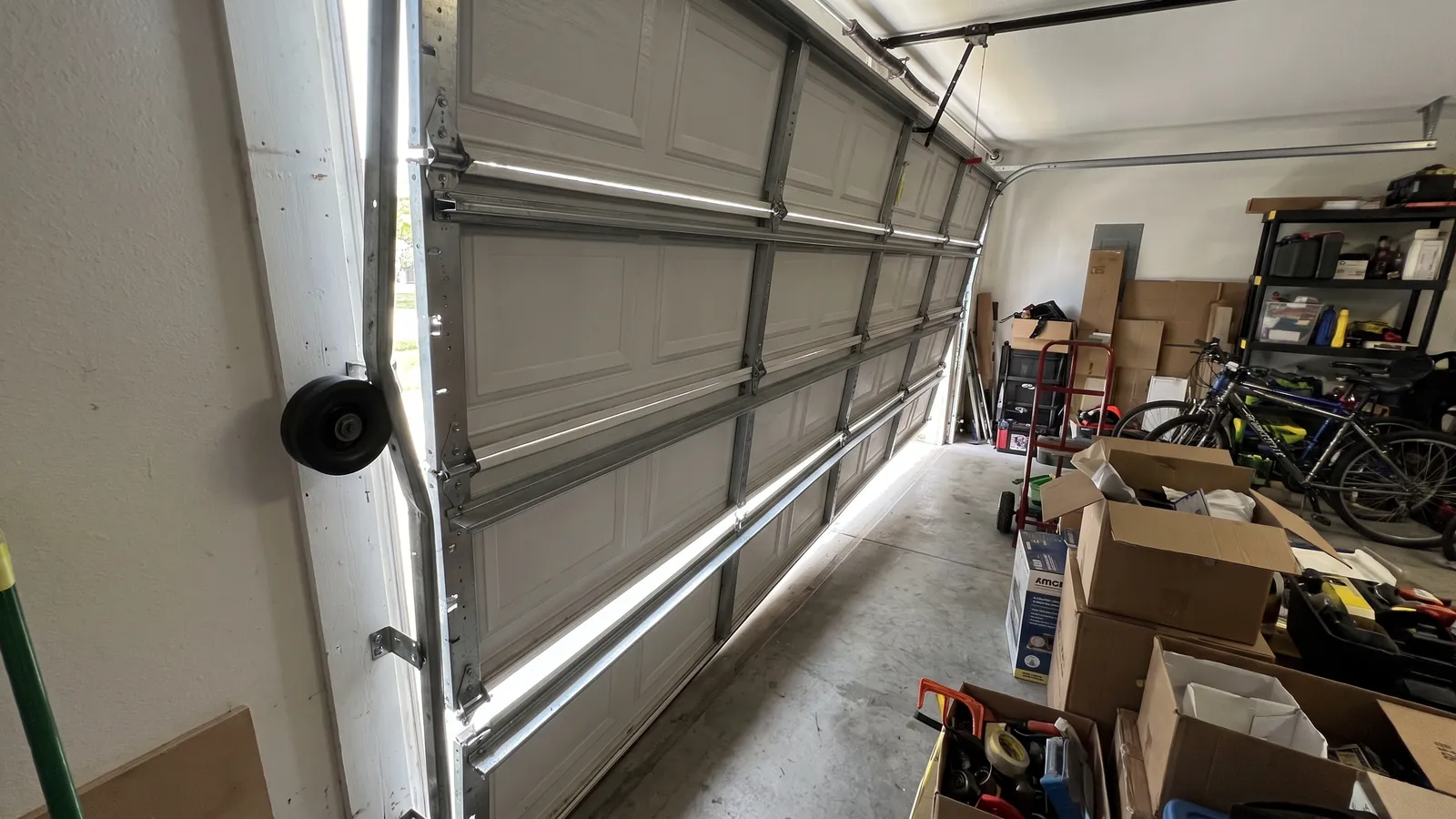
Most calls on the Kansas side come down to a short list, and each announces itself differently. One loud crack, after which the opener strains or lifts the door a few inches and gives up, is a broken torsion spring. A door hanging crooked with a cable slack is a snapped or unwound lift cable, usually with a roller out of the rail as well. A motor that hums, clicks, or runs happily without moving anything is a stripped drive gear, a failed capacitor, a disengaged trolley, or a spring that broke so cleanly nobody heard it. A door that starts down and climbs straight back up is a photo-eye or travel-limit problem, and in a cold garage it is often simply condensation on a lens. And a door that will not break free of the floor on a February morning is frozen to the slab by meltwater that ran under the gasket and set overnight.
We do not diagnose from the kerb. The technician checks the springs for breaks and for the right wire gauge and length for the door's actual weight, pulls the release and lifts the door by hand to feel where the balance has gone, looks at the cables where they meet the drums and the bottom brackets, runs every roller and hinge, sights down the rail for a bend, checks the opener's force and travel settings and the photo-eye alignment, and only then tells you what it needs and what that costs. Parts and labour are listed separately. Nothing gets replaced because it is convenient to replace — a door with a snapped spring and tired rollers gets a spring and a conversation about the rollers, not a surprise at the bottom of the invoice.
The common parts ride on the truck: torsion springs in the gauges that suit the 16-by-7 and 9-by-7 steel doors on most houses here, extension springs for the older single-car openings in Kansas City and Leavenworth, lift cables, drums, nylon rollers, hinges, bottom brackets, photo eyes, opener gear kits, capacitors and boards for the LiftMaster, Chamberlain and Genie units that run most garages in the metro. That is why the majority of repairs are done when the technician leaves. When a door needs something we do not carry — a replacement section for a door from the 1990s, say — you get the lead time and an honest comparison against replacing the door before you spend anything.
No permit is involved in any of this. Springs, cables, rollers, openers, sensors and seals are repairs, and Kansas does not license the garage door trade at state level, which is exactly why the question to ask any company here is about insurance rather than licence numbers. Ask whoever turns up for their certificate, and ask before the work starts.
What's included
The whole door gets looked at
Springs, cables, drums, rollers, hinges, rail, bottom brackets, opener force and travel settings, photo eyes and the hand-balance of the door, all checked before a price is named.
You approve the figure first
Parts named with their cycle rating, labour stated, total written down, and the technician waits for a yes before starting.
Stocked for this climate
Winter-weight springs, cables, rollers, hinges, sensors and opener parts for the doors and motors most houses here have, so most jobs end in one visit.
Balanced before we leave
Every door leaves lifting evenly by hand, running at the right force, and reversing on the obstruction test the opener standard requires.
Rust gets a proper look
Bottom sections, bottom brackets and cable ends take the worst of the road salt and the wet slab, and they are where an old door fails first.
Honest about the end of life
When a thirty-year-old door needs a section nobody makes any more, you hear that before you pay for a repair that buys six months.
Garage door repair prices on the Kansas side
| Job | Typical price | Notes |
|---|---|---|
| Service call and diagnosis | $69 – $119 | Comes off the bill when we do the repair |
| Torsion spring, one | $215 – $340 | Pair usually advised; see springs |
| Torsion springs, matched pair | $310 – $495 | High-cycle upgrade adds $55 – $140 |
| Lift cables, pair | $140 – $270 | Drums checked and rewound with them |
| Door reset on the rail | $165 – $380 | More when rail or rollers need replacing |
| Nylon roller set of ten | $140 – $280 | Noticeably quieter, and kinder on the hinges |
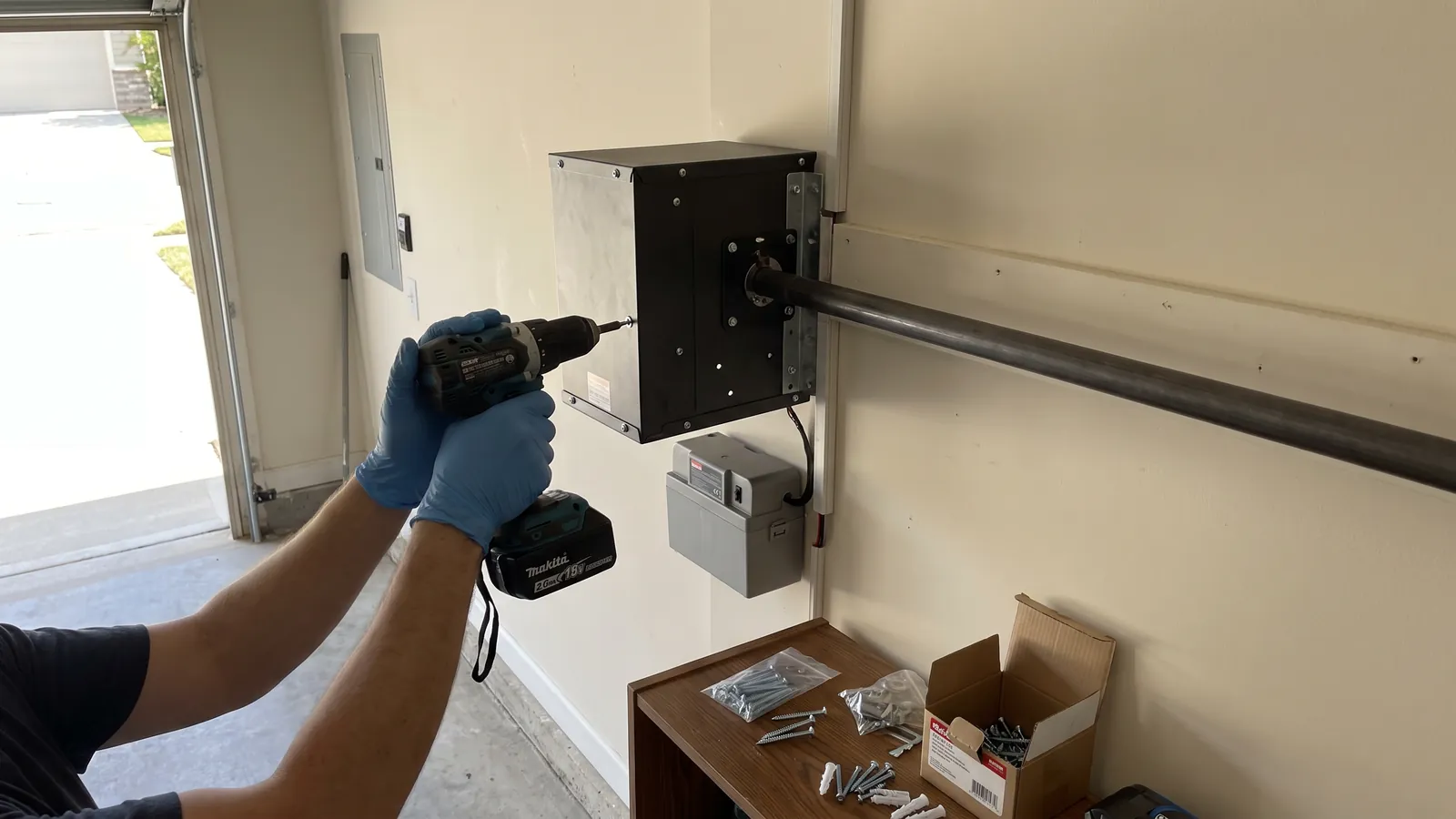
| Opener repair (gear, capacitor, board) | $140 – $320 | Board work depends on the model |
| Safety sensors, pair | $100 – $200 | Alignment and wiring included |
| Bottom weather seal | $95 – $210 | See seals |
These are 2026 ranges for the Kansas side of the metro, to give you a figure to plan around. What you pay is agreed in the driveway before work starts, with parts and labour listed separately; new doors and openers get a written figure that holds for 30 days.
Recent work
Questions we get about garage door repair
How quickly can somebody come?
Same day for a door that will not open or close, which is most of what we do, and usually the next day for everything else. Say on the phone if a car is shut in or the door is stuck open overnight and you move to the front of the queue — a garage standing open in January is both a heating bill and an unlocked house.
Can I do any of this myself?
Rollers, a bottom seal and nudging a photo eye back into line, carefully, yes. Springs and cables, no. A torsion spring holds enough energy to break an arm, and the usual injury is the winding bar coming out of the cone. Anything on the shaft or at the drums belongs to somebody with the right bars and the habit of using them.
Why does this keep happening in winter and not summer?
Steel stiffens as it cools, old lubricant turns to treacle, and a spring already near the end of its cycle count fails on the first genuinely cold morning. Normal January lows in the metro are around 20 degrees. The same cold snaps give us frozen bottom seals, fogged photo eyes and openers straining against doors that have gone heavy.
Do you work on every brand?
Yes. LiftMaster, Chamberlain, Craftsman, Genie, Linear, Marantec, Overhead Door, Wayne Dalton, Clopay, Amarr and the rest. We are not affiliated with any of them; the names are just descriptions of what is on your ceiling. Parts for older or unusual units can add a day or two.
Is there a weekend surcharge?
Technicians work seven days at the same rates. A genuine middle-of-the-night call-out — somebody driving to you at two in the morning — carries a stated after-hours fee, and you hear that figure before anyone is dispatched.
Do repairs need a permit in Kansas City or Johnson County?
No. Springs, cables, rollers, openers, sensors, seals and panels are maintenance. Permits come into it only when the opening itself changes — widening it, moving the header, altering framing — which is building work. See the Kansas contractor guide.