Belt, chain or wall-mount, and why battery backup is not optional in this metro
Openers are not interchangeable. What is above your head matters if a bedroom sits over the garage, what is beside your head matters if headroom is tight, and what happens in a power cut matters anywhere that has lived through an ice storm.
Chain drive is the old reliable: a metal chain pulling a trolley along a rail. It is the cheapest to buy and fit, it will haul a heavy door without complaint, and it is noticeably louder than the alternatives. On a detached garage, or an attached one with nothing but a utility room above, that noise is nobody's problem and a chain drive is honest value.
Belt drive swaps the chain for a reinforced rubber belt. It is quieter by a wide margin — enough to matter if there is a bedroom over the garage, which on the two-storey houses across Olathe, Lenexa and Overland Park there very often is. It costs more and the belt is a wear item, but on the doors most families here run it is the one we fit most.
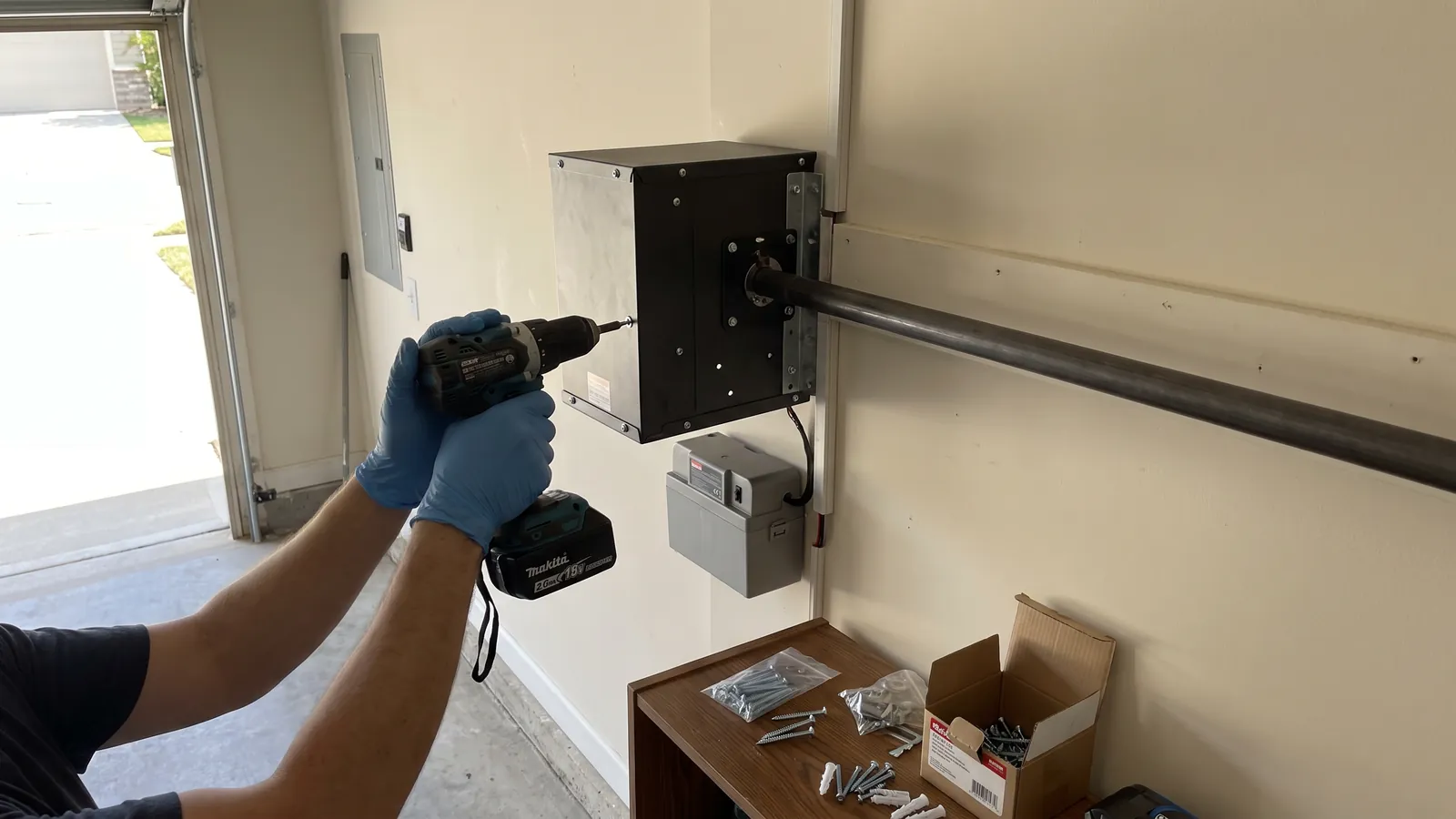
Wall-mount, or jackshaft, does away with the overhead rail entirely and mounts beside the torsion shaft. It is the quietest of the three, it frees the entire ceiling — which matters for storage racks, a car lift, or a garage with low headroom — and it is the dearest. It also needs a door with torsion springs, so it is not an option on older extension-spring setups without converting those first.
Battery backup is where this metro differs. The ice storm of January 2002 put 350,000 customers in the dark, and smaller outages arrive most winters. Without a backup, an opener in a power cut is a dead weight on a door you then have to release and lift by hand — awkward with a healthy door, impossible with a tired spring, and genuinely unpleasant at six in the morning with the car on the wrong side. A battery gives you a reliable number of cycles with no mains at all. On an attached garage that functions as the household's main door, we would argue it is the single most useful feature on the list.
Everything else is preference. Wi-Fi lets you check from your phone whether the door is shut, which is more useful than it sounds. Soft start and stop reduces the thump. Integrated LED lighting is worth having on any unit replacing something from the era of a single dim bulb. We fit what suits the door and the garage, set the travel and force properly, align the sensors, programme the remotes and keypad, and test the obstruction reverse before leaving.
What's included
Matched to the door's weight
An opener specified below the door's weight is one that dies early. The door is weighed, not estimated.
Battery backup fitted as standard
Because the metro loses power in winter and a dead opener on a heavy door is a genuine problem, not an inconvenience.
Old unit removed and taken away
Including the rail, the brackets and the packaging. Nothing is left leaning against the wall.
Sensors fitted and aligned
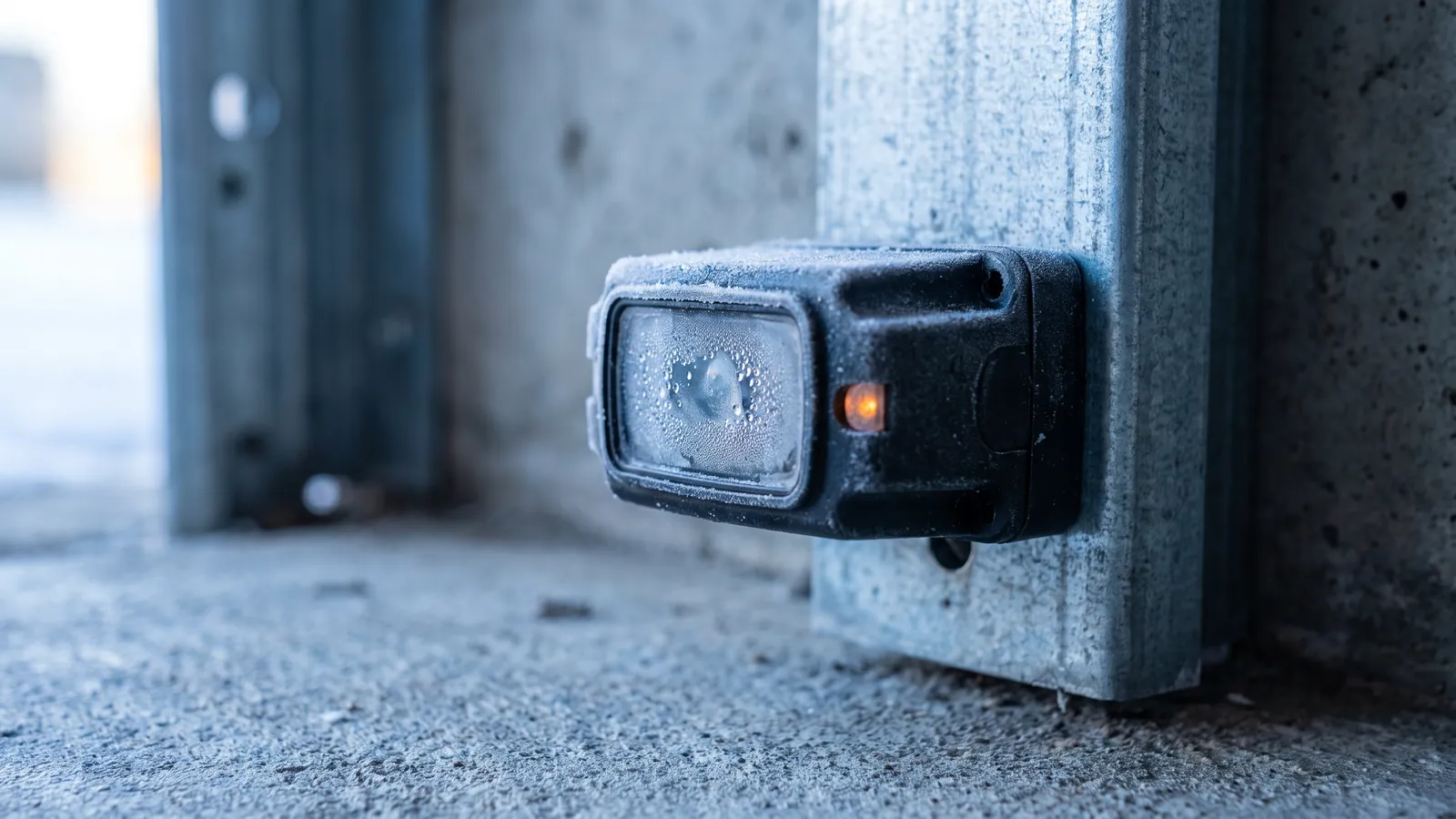
Photo eyes mounted at the correct height, wired cleanly along the rail rather than draped, and tested.
Travel, force and reverse set
Door closes fully, seals properly, and reverses on the obstruction test before anyone leaves.
Remotes, keypad and app set up
Handsets paired, exterior keypad coded, and the phone app connected if the unit has it.
New opener installation prices on the Kansas side
| Job | Typical price | Notes |
|---|---|---|
| Chain drive, fitted | $420 – $680 | Best value where noise is not a concern |
| Belt drive, fitted | $560 – $940 | Quiet; the usual choice under a bedroom |
| Belt drive with battery backup | $640 – $1,050 | What we fit most on attached garages |
| Wall-mount jackshaft, fitted | $790 – $1,350 | Frees the ceiling; needs torsion springs |
| Heavy-duty for an oversized door | $720 – $1,250 | Double, insulated and solid-wood doors |
| Second opener, same visit | Less $70 – $130 | Where a garage has two doors |
| Exterior keypad added | $70 – $140 | Fitted and coded |
| Removal and disposal of old unit | Included | Rail and brackets taken away |
These are 2026 ranges for the Kansas side of the metro, to give you a figure to plan around. What you pay is agreed in the driveway before work starts, with parts and labour listed separately; new doors and openers get a written figure that holds for 30 days.
Recent work
Questions we get about new opener installation
Which type should I actually choose?
Detached garage or nothing living above it: chain drive, and keep the money. Bedroom or living space over the garage: belt drive, every time. Low headroom, ceiling storage, a car lift, or you simply want the quietest thing available: wall-mount, provided the door runs on torsion springs. That covers nearly every house we visit.
Is battery backup really worth it here?
We think so, and the 2002 ice storm is the argument — 350,000 customers without power, and every one of those garages became a manual-lift job. Even in an ordinary winter the metro loses power for a few hours here and there. A backup turns that from a problem into a non-event, and the premium over the same opener without one is modest.
How long does an opener last?
Ten to fifteen years is a fair expectation for a decent unit on a well-balanced door, and the balance is the key. An opener fighting an under-sprung door is doing far more work than it was designed for and will wear out years early. If your current unit died young, it is worth checking the springs before assuming the opener was poor.
Can you reuse my existing rail?
Usually not, and it is rarely wise even where it is physically possible. Rails are matched to their motor units, and the trolley, chain or belt is a wear part of the same age as the opener that failed. A new unit comes with its rail, and fitting it fresh is how you get the warranty intact.
Will a new opener make my door quieter?
Substantially, if you are moving from an old chain drive to a belt or wall-mount. But if the rumble is coming from steel rollers or dry hinges, a quiet opener just lets you hear the door more clearly. We check both, and a nylon roller set fitted during the same visit is inexpensive.
Do I need a permit to have an opener fitted?
No. An opener is equipment, not building work, and no permit requirement is published for it by the Unified Government or the Johnson County cities. It does want a proper earthed outlet in the ceiling rather than an extension lead, and if there is no outlet up there, that is an electrician's job before ours.