A dock door down is a business stopped, not an inconvenience
Commercial doors are bigger, heavier, cycled far more often and attached to something that loses money when they stop. The repairs are the same family of faults as a house door, scaled up, and the thing that actually differs is how fast it has to be back in service.
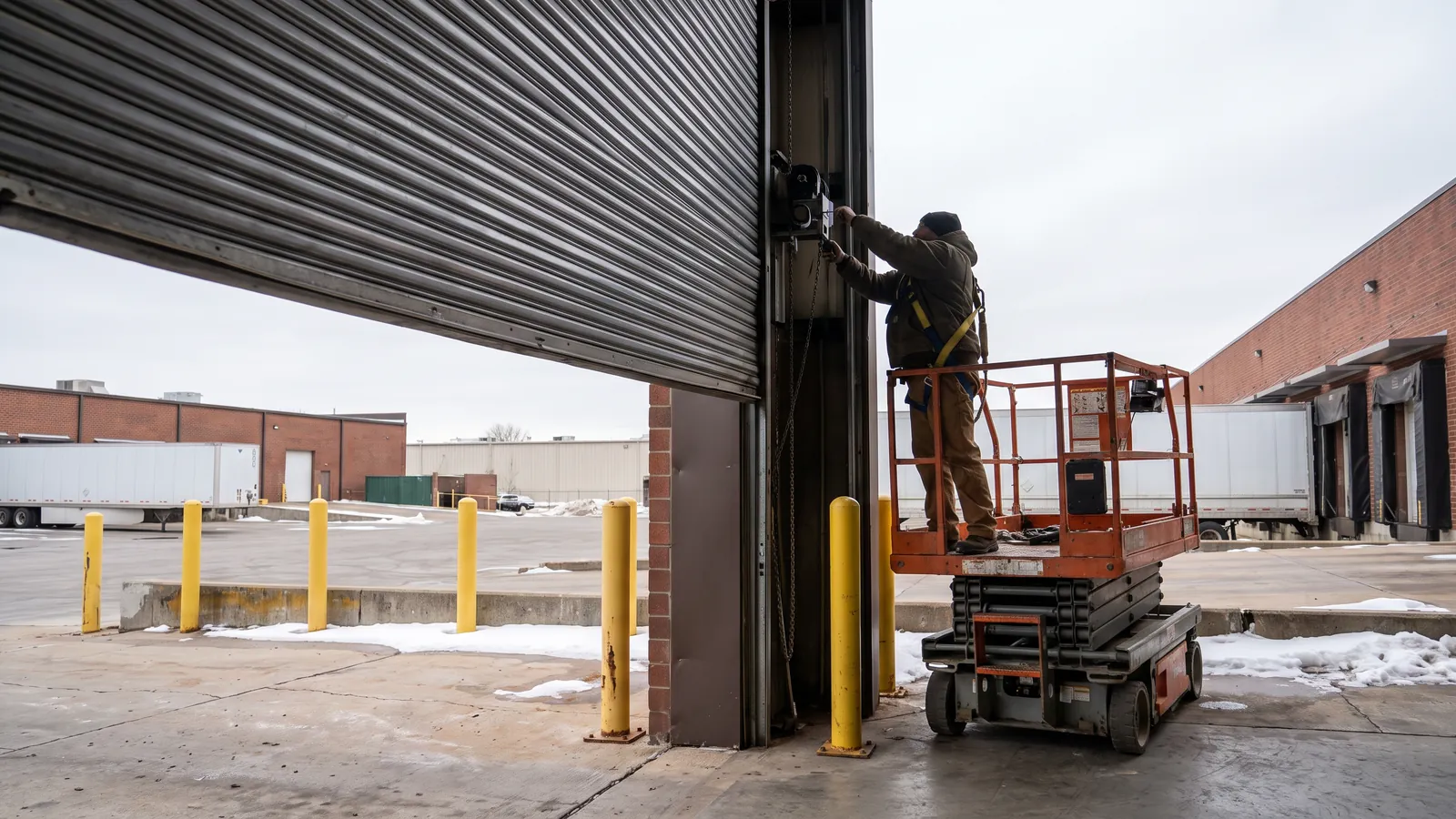
What we work on. Sectional overhead doors on shops, warehouses and workshops. Steel roll-up doors — the coiling curtain type on self-storage, loading bays and service buildings — which have their own failure modes around the barrel, the counterbalance and the bottom bar. High-lift and vertical-lift configurations where the rail runs further up the wall to clear equipment. And the commercial operators that drive them: jackshaft, trolley and hoist units, with the three-button stations, safety edges and photo eyes that go with them.
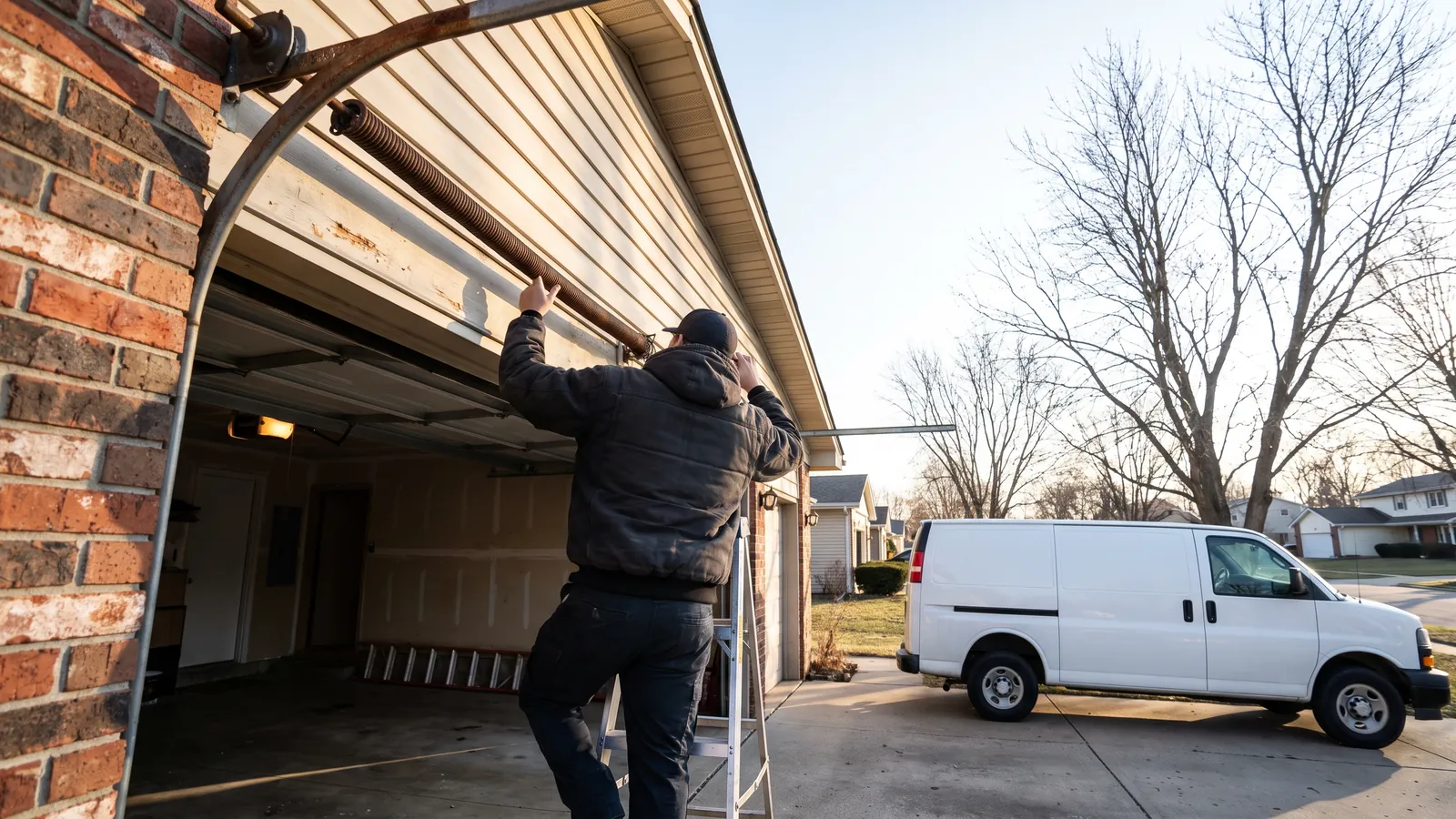
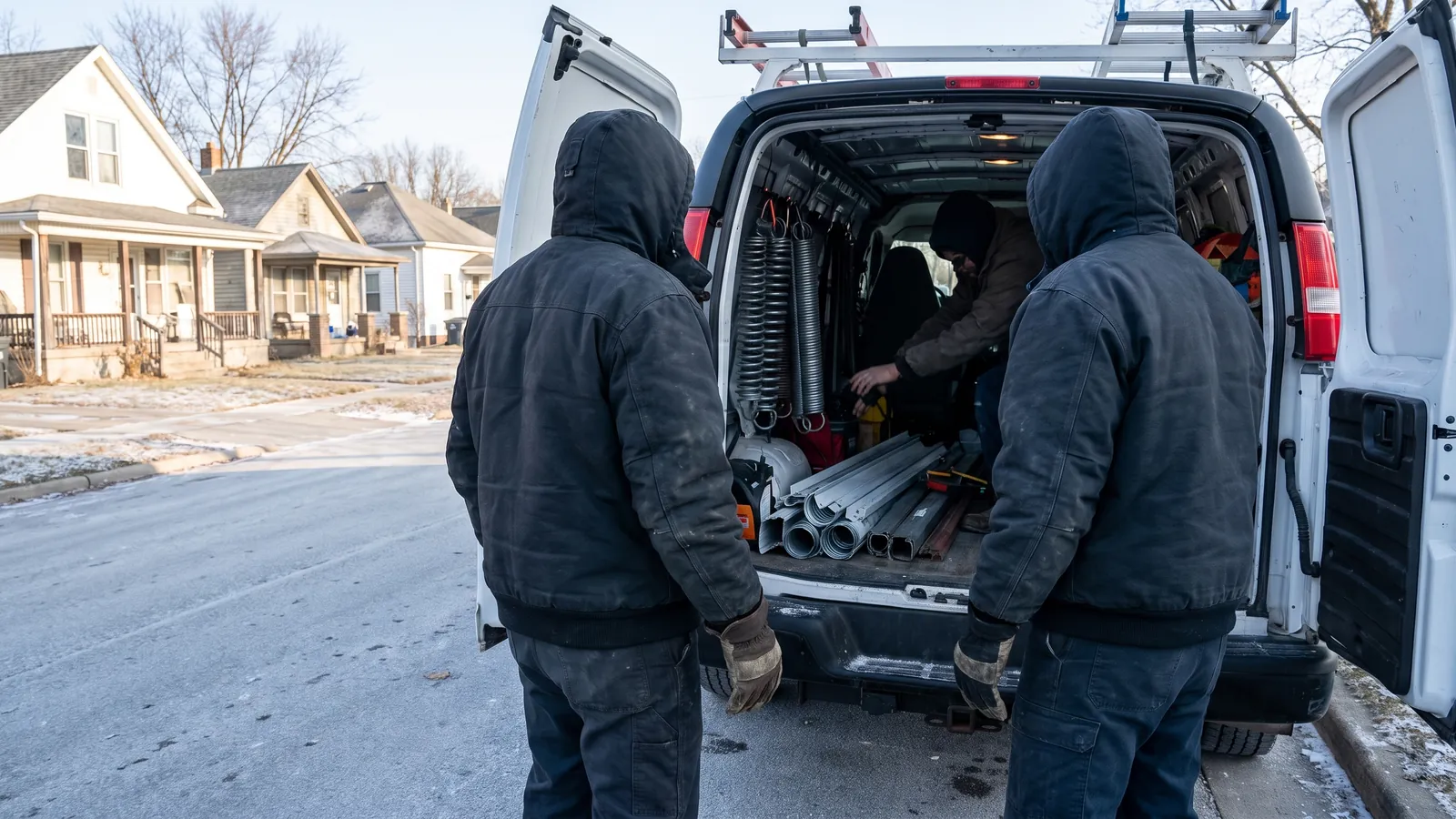
What goes wrong, and why it is usually cycles. A house door runs four or five times a day. A dock door at a working business can run forty, and at that rate a spring rated for 10,000 cycles is finished inside a year. The honest answer on most commercial springs is therefore high-cycle stock as standard — 25,000 or 50,000 — because fitting residential-grade springs to a door that runs constantly is a false economy that buys a call-out every spring. The same logic applies to rollers, hinges and the drive.
Impact is the other half of the job. Forklifts, pallet jacks, delivery vans and reversing lorries all meet dock doors eventually. The result is bent rail, creased bottom bars, cracked hinges and doors off the rail — the same repairs as a residential off-track job, carried out on heavier gear. Where a business takes repeated hits, bollards and impact protection are a cheaper conversation than the fourth door repair of the year, and we will raise it.
Safety equipment matters more here, because commercial doors are larger, faster and operating around staff and moving equipment. Safety edges, photo eyes and properly working reversing systems are not optional extras, and an operator with a bypassed safety is a liability sitting over a doorway people walk through. Anything we find bypassed gets reported plainly and quoted to put right.
On scheduling. We understand that a door down is a business stopped, so commercial calls are prioritised and we will work around trading hours where that is what suits — early, late or at a weekend, agreed in advance with the price for it stated. For sites with several doors, a planned maintenance schedule with a written report per door is far cheaper than waiting for each one to fail, and it is how the busy sites we look after keep out of the emergency column.
What's included
High-cycle springs as standard
25,000 and 50,000-cycle stock for doors that run dozens of times a day, because residential springs on a dock door last months.
Roll-up and sectional both covered
Coiling curtain doors, sectional overheads, and high-lift and vertical-lift configurations.
Commercial operators serviced
Jackshaft, trolley and hoist units, three-button stations, safety edges and photo eyes.
Impact damage repaired properly
Bent rail, creased bottom bars and cracked hardware put right, with impact protection suggested where it keeps happening.
Safety systems never bypassed
Anything found disabled is reported and quoted to restore, because these doors operate around staff.
Scheduled maintenance available
Planned visits with a written report per door, which costs far less than a run of emergency call-outs.
Commercial garage door repair prices on the Kansas side
| Job | Typical price | Notes |
|---|---|---|
| Commercial service call | $95 – $175 | Waived when the repair proceeds |
| High-cycle spring, per spring | $290 – $620 | 25,000 or 50,000-cycle commercial stock |
| Roll-up door spring adjustment | $180 – $390 | Barrel counterbalance reset |
| Commercial cables, pair | $220 – $480 | Heavier wire, longer runs |
| Sectional door off-track reset | $280 – $640 | Impact damage priced separately |
| Commercial operator repair | $220 – $560 | Gear, contactor, board or limits |
| New commercial operator fitted | $980 – $2,400 | Type and horsepower dependent |
| Scheduled maintenance, per door | $120 – $240 | Quarterly or by cycle count, with a report |
These are 2026 ranges for the Kansas side of the metro, to give you a figure to plan around. What you pay is agreed in the driveway before work starts, with parts and labour listed separately; new doors and openers get a written figure that holds for 30 days.
Recent work
Questions we get about commercial garage door repair
How fast can you get to a dock door that is down?
Commercial calls are prioritised, and same-day is the normal expectation on the Kansas side. Tell us the door type, roughly what it is doing and whether the bay is completely blocked when you ring, because that decides what goes on the truck before it sets off.
Why do our springs keep breaking?
Almost certainly because they are residential-grade springs on a door that runs commercial cycles. A 10,000-cycle spring on a door used forty times a day is used up in under a year. High-cycle commercial springs cost more up front and last several times as long, which on a working dock door is not a close call.
Can you work outside our trading hours?
Yes, and for a lot of sites that is the sensible arrangement. Early mornings, evenings and weekends can all be scheduled, agreed in advance with the rate for it stated up front. It is usually cheaper than losing a bay during business hours.
Do you handle roll-up doors as well as sectional?
Both. Coiling steel roll-up doors — the kind on storage units and loading bays — have their own arrangement around the barrel, the counterbalance spring inside it and the bottom bar, and they are a different job from a sectional overhead. We work on both, plus high-lift and vertical-lift sectional setups.
Our forklift keeps hitting the same door. Is there anything to do about it?
Yes, and it is cheaper than the repairs. Bollards or impact posts either side of the opening, and in some layouts an impact-resistant door designed to be reset rather than replaced. If you are paying for the same repair three times a year, that spend pays for itself quickly, and we will say so rather than just taking the repeat work.
Can we put several doors on a maintenance schedule?
Yes, quarterly or driven by cycle count, with a written report per door covering springs, cables, rollers, hardware, operator and safety equipment. For any site with more than a couple of doors it is the cheapest way to stay out of the emergency column, because it catches the spring at nine months rather than at failure.